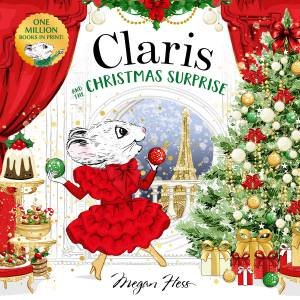
Every reader will love the adventures of Parisian mouse, Claris, busy in the kitchen making a variety of sweets for the coming celebrations. In a book full of the sounds, sights and customs of Christmas, the little mouse makes loads of sugary sweets and teeny cakes, wrapping them all in bright paper. With almost every page drawn within sight of the Eiffel Tower, readers will love the repeated image, adding to their knowledge of the wider world. Bright, sumptuous illustrations fill every page, using the colours associated with Christmas to great effect. Claris’ bright red dress, the red curtains, red cakes, ribbon and wrapping paper, all combine to give a wonderful image of Christmas and its trappings, promoting the idea to younger readers.
Claris bakes her cakes and wraps them, filling her basket with gifts. She walks thorough the snow outside, looking for people to give her gifts to. She gives them to a busker, singing carols to the passers by, then finds a group of cats taking time out on a bridge over the Seine, and with only a few left, she hears the chimes telling her it is midnight. She must get home to Monsieur and finds a guard dog on his way home. He gives her a lift and she asks him to join her for Christmas. So the three have a happy Christmas and many other people have benefitted form her generosity.
Wrapped within this story are the values of gift giving, sharing and friendship. Claris makes things to give away, taking home someone who would have been alone on this day. The book supports the idea of Christmas being a time for sharing and seeing that everyone has someone to be with.
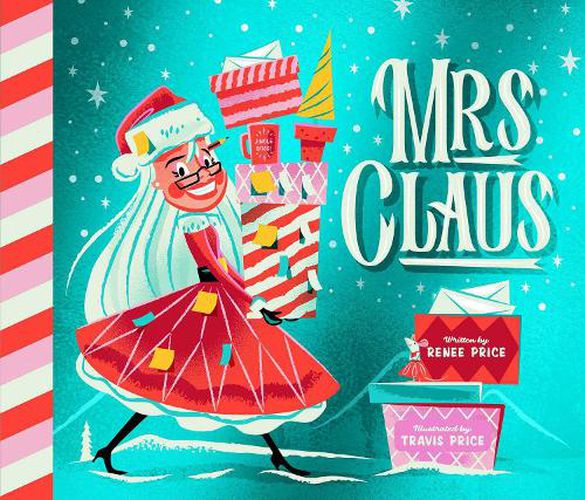
Another book to add to the Christmas collection in a library, Mrs Claus celebrates all the work that Mrs Claus does to ensure that everything goes smoothly for Santa Claus as he takes out his sleigh and delivers presents.
The North Pole has a secret to each Christmas Eve's success. She's strong and smart and magic ... and she wears a bright red dress!
Travis Price’s memorable illustrations immediately bring Mrs Claus to life. She is drawn as a bright charming woman, with red lipstick and long hair, big eyes and eyelashes and small spectacles, always with a smile on her face. The jobs that she does are very important. She pins up a list on the wall to ensure that none are forgotten. They include make a naughty and nice list, clean & service the sleigh, make toys and other chores. Once Mrs Claus and elves and cute little mice think of all the cool toys to make, Mrs Claus starts her lessons in her elf school. Then she teaches the elves how to fly the sleigh, reads the letters to the North Pole and wraps all the presents. And finally, Santa and the elves prepare a special surprise for Mrs Claus on Christmas Day.
The narrative flows smoothly and would be good to read aloud while the illustrations complement the story, adding minute details like the tiny mice that children will delight in finding. The book is 'For the special people who make every Christmas magical. Especially our Mums!’ and children will be able to think about the work that their mothers and grandmothers might do to make Christmas a wonderful time.
This book could be a good contrast to the traditional Christmas stories featuring Santa Claus, giving children a glimpse of a vibrant, clever, organised and cheerful Mrs Claus. Teacher notes are available.
Themes Christmas, North Pole, Mrs Claus.
Pat Pledger
Santa Post by Emma Yarlett
Walker Books, 2023. ISBN: 9781529512076. (Age:3+)
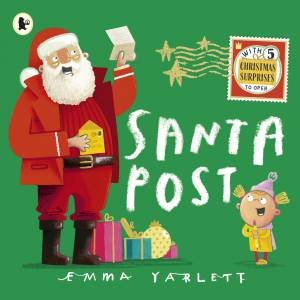
Just five sleeps to go before Santa had to load his sleigh and make that once-a-year trip that brings so much delight to little people. But then down his chimney comes a late letter from Amy asking for a ????? Unfortunately, the most important words have been burnt out by the fire's embers and Santa has no idea what Amy has requested. Never before has he not delivered what a child wants and so he calls on his friends - Head Elf Elfalfa, Mr Polar Bear and the Chief Reindeer - to help but nothing they deliver quite fills the bill. What is Santa to do?
Reminiscent of the format of The Jolly Christmas Postman, this is an intriguing book with its flaps and letters to and from Santa - although they are firmly attached to the book as lift-the-flap pages - and young readers will have fun not only trying to work out what Amy might have asked for, but also investigating how Head Elf Elfalfa, Mr Polar Bear and the Chief Reindeer responded. How would they feel if they were Amy and received their suggestions on Christmas morning? If they were Santa, how would they solve the problem? And what might it be that Santa finally delivered?
Written in a variety of fonts that may be difficult for its intended audience to read independently, this is one to be shared between adult and child, perhaps as they snuggle down for the night.
This is one of the Post Bag series from this creator which includes Dragon Post,Monster Post, and the latest, Unicorn Postwhich were inspired by a childhood memory of her husband and which have all the elements that encourage young readers to want to read and revisit books in print. There is nothing quite like physically lifting a flap to discover what's hiding underneath. In this interview, she even challenges budding writers to create their own story.... "One morning, you find a magical creature on your doorstep that needs a new home. Write a letter to its new owner, telling them all about it, what it likes and doesn't like, and how they can become friends with their new magical pet."
Even though email and texts seem to be the most common way of communicating these days, nevertheless the magic of the traditional letter to Santa never seems to fade and using the examples in this book, there is much that can be used to teach children about structure and content of that format as they write their own letters to send. (Hopefully, their letters won't perplex Santa like Amy's did.)
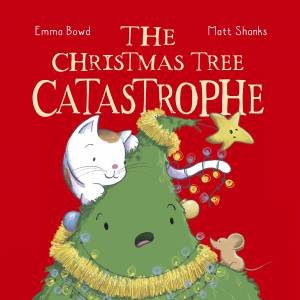
Christmas Eve and things are happening in this house. The cat, Kitty McCatty is chasing a mouse, while the baubles on the Christmas tree are arguing, the Nutcracker trying to intervene. Using ’Twas the night before Christmas’ poem as a template the story unfolds in rhyme. This adds to the fun of the book as readers predict the rhyming words as they go.
Suddenly the lights flicker as the mouse runs up inside the tree, followed of course by Kitty McCatty. The baubles stop bickering as the mouse leaps from the tree, leaving the cat stuck at the top of the swaying tree.The whole crowd yells get rid of that cat, and a small voice offers help. The Gingerbread man has an idea. He outlines a plan to the Nutcracker and baubles and lights. They use the lengths of tinsel to make the tree stand up straight, one group pulling the tree one way, the others pulling it the other. When Santa comes down the chimney later in the night, he finds the tree almost straight with a kitten at the top instead of an angel.
This is a fun book, easy to read, wonderful as a read aloud, one that will encourage children to predict rhyming words and look for the original poem to compare the two.
Matt Shanks’ illustrations are bright and cheerful, full of colour and movement, encouraging readers to take in all the detail, watching the mayhem caused by the kitten chasing a mouse. All sorts of things cover each page, encouraging children to recognise those things which are customary necessities at Christmas in western homes. The tree with all its trimmings is delightful, especially the face at the top, and several branches used as limbs when it is trying to stop the cat. One page is turned to portrait as kids will turn the book to see the tree in all its beauty.
A fun book for one and all.
Themes Problem solving, Christmas, Christmas tree, Verse.
Fran Knight
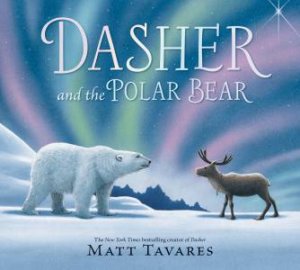
Dasher and the Polar Bear by Matt Tavares
Walker Books, 2025. ISBN: 9781529528824.
Dasher, the little doe who left the travelling circus to follow her dreams of living where there is snow beneath her hooves and the North Star above her head, and subsequently changed Christmas forever, is back in her third adventure - this time while she is practising her flying, she stops to admire the Northern Lights and is startled by a loud roar! But George the polar bear is not as scary as she feared - in fact, he is lonely and is somewhat mesmerised by Dasher's ability to fly, something he would love to do himself.
But even though Dasher spends a lot of time trying to teach him, it seems his four feet are destined to remain on the ground. But when she returns to her mother and recounts her adventures, her mother has some wise advice - "Christmas magic isn't the same for everyone. And sometimes it works in unexpected ways."
Does that mean that one day George will, indeed, fly?
Set against the beautiful artwork that portrays the starry polar sky and give the story a sense of realism, this is a one that is going to reinforce the magic of this special time as well as raise a smile as little ones imagine the spectacle of George's landings. Whether shared as part of the series, or a standalone, it is one that reminds us of the intangible, long-lasting gifts that Christmas offers, like reaching out to strangers.
Themes Reindeer, Christmas.
Barbara Braxton
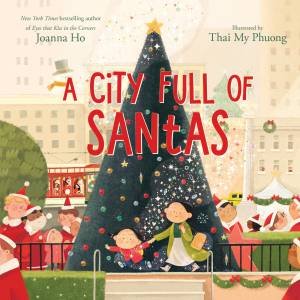
A city full of Santas by Joanna Ho. Illus. by Thai My Phoung
For five years the little girl has tried to stay awake to meet Santa face-to-face, and every year she has fallen asleep before he has arrived. But today is the day - her mother is taking her into the city to meet him IRL.
But when she gets there she discovers the streets are full of Santas - so who is the real Santa? She knows he "smells like peppermint and chocolate, laughs like the sun clapping its hands and feels like a heart full of glitter" so she figures she will be able to detect him easily despite all the choices. But can she? Or will she go home disappointed?
Once again, the author of such iconic stories as Eyes that Kiss in the Corners, Eyes that Speak to the Stars and Eyes that Weave the World's Wondershas crafted a special story for young readers echoing the excitement that is starting to build as they patiently wait in the queue to tell Santa their secret wishes, which in turn, are echoed by illustrations that will look so familiar. Ho has a way with words that just make the story roll off the tongue, and little ones will understand the confusion the little girl feels when she is confronted by so many versions of the most popular man in their lives at this time.
Given the tight parameters of traditions which seem to enclose Christmas, it amazes me how many quality stories about the time continue to be written, each different and each almost inhaled by our young people as they are shared, but this is another and it is a stand-out.
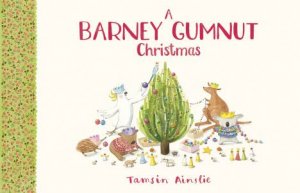
Barney Gumnut the cute little kolas with his friends Hoppity (kangaroo), Robert (wombat), Wilfred (budgie), Edith (echidna) and Charles (cockatoo) are very excited because it is Christmas Eve. Edith asks Barney ‘what does Christmas actually mean?’ and each of the friends have a different answer; celebrating with friends, giving and receiving presents, swimming playing games, eating pavlova and wearing paper hats. Charles declares that ‘Christmas means creating special things to share!’ so the friends each make something special. Robert made mince pies, Barney made cards, Wilfred collected gumnuts, Hoppity made a little nativity scene and a gingerbread house and Edith and Charles made Christmas decorations. They wrapped presents, decorated the tree and then went camping finally having a Christmas feast with their ‘bestest friends.’
Children will easily relate to the many familiar things that are meaningful for the animals and are likely to find something that they have experienced themselves when celebrating a holiday such as Christmas. The delight in giving and receiving presents, in making something to share and gathering for a wonderful meal is beautifully illustrated in soft watercolours. The lovely endpapers show Australian flora including gumnuts and each illustration has minute details for a young child to pore over.
A Barney Gumnut Christmas is a gentle exploration of the importance of friendship and sharing. It would make a perfect bedtime story and a lovely way to explore some of the traditions surrounding the festive season.
Themes Christmas, Sharing.
Pat Pledger
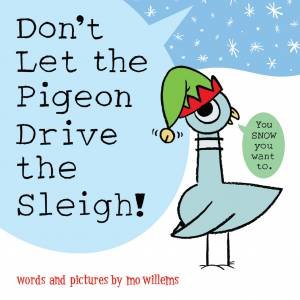
Don't let the pigeon drive the sleigh! by Mo Willems
Santa has to go and wrap presents, but as he leaves he has a last warning - "Don't let the pigeon drive the sleigh!" And so begins a conversation between the pigeon and the reader as the pigeon begs, pleads, cajoles and even attempts to bribe the reader into letting him get into the sleigh! It's all the pigeon wants to do and he has some very convincing arguments that he is well-qualified to take on this task. Until...
The action is carried along entirely in the pigeon’s appeals but it is clearly intended that the young child put on the “parent’s” hat to say no, much like a role-reversal of when they themselves want something and the parent has to withstand all the child’s reasoning and promises, making it an interactive read that is lots of fun. Not only can they stretch their imaginations to suggest why the pigeon shouldn’t drive the sleigh but they can put themselves in the pigeon’s place and also think of arguments they might use to get their own way. The only issue is, that in the child’s denials to the pigeon, the parent might hear themselves echoed! Children learn what they live!
Continuing the series that has enchanted children for decades, this has the charm, humour and appeal of the original as well as the format and instantly recognisable illustrations, and the twist in the tale will delight them. They might even like to predict what the pigeon might get up to next!
Themes Santa Claus, Christmas, Pigeons.
Barbara Braxton
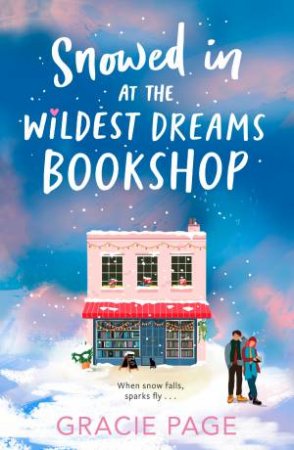
Snowed in at the Wildest Dreams Bookshop by Gracie Page
Fans of The Wildest Dreams Bookshop will be thrilled to have another stand-alone romance set in the picturesque seaside town of Fox Bay in Cornwall. Ivy’s first term at art college has been disappointing. Unable to afford to live in the college’s residential accommodation, she must travel to college and hasn’t made any friends. What is worse – she has lacked inspiration for her art and is failing her course. She returns to Fox Bay, with a job in The Wildest Dreams Bookshop, but feels isolated and depressed. Then Trip, a bright optimist, always cheerful and seeing the best in people, making friends with little effort, wants her to show him the sights of the town and when they work together on the school’s annual show, sparks begin to fly.
The trope of grumpy versus sunshine is managed well by Gracie Page, making Ivy the antisocial character and Trip the guy full of happiness. The reader can identify with Ivy whose dreams of leaving a small town and shining in a new environment are shattered, while Trip’s optimism is alluring. However there is a small cloud over Trip’s reason for being in Fox Bay that is subtly written by the author and readers will enjoy getting to know the backgrounds to the characters.
Snowed in at the Wildest Dreams Bookshop is an engrossing rom com that will have readers quickly racing through the book, eager to see how Ivy’s life and art progresses while enjoying the cheer and friendliness of Trip. This is a feel-good book, perfect for holiday reading and fans of Lynn Painter and Jenny Han. Readers may also enjoy Grumpy darling by Alexandra Moody.
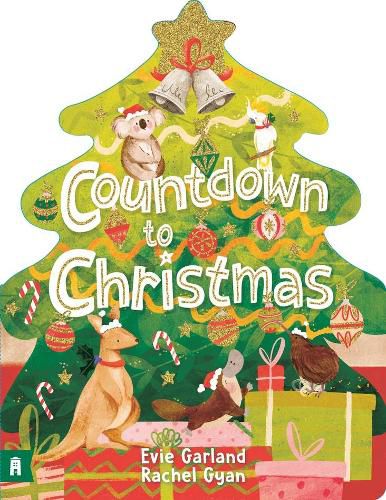
Countdown to Christmas by Evie Garland and Rachel Gyan
Albert Street Books, 2025. ISBN: 9781761181993. (Age:3+)
A colourful board book in the shape of a Christmas Tree will have instant appeal to young readers. The book takes the reader on a countdown from ten to one, as each page shows the tree in an every increasing amount of decoration. On the left hand side of each double page is a view from the window, with some decorations appearing later in the countdown. Children will love picking out the bevy of animals shown as the pages are turned. They will love the increasing number of decorations appearing on the tree and the presents building up at its base.
Under the window on the left hand side are rhyming lines showing the additions to expect when looking at the tree.
Apart from learning the numbers, from ten bobbles down to one star, children will have experience in prediction, observation and reading along with the adult. They will be able to look at the customs of Christmas in Australia, pointing out the range of decorations added to the tree.
And all wrapped in a a strongly produced board book, ready for a large amount of use by little fingers and hands.
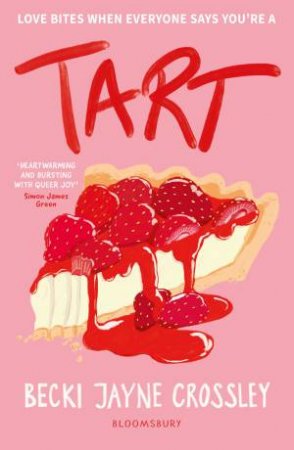
Teenagers and social media are very much in the news at the moment with the Australian Government’s move to restrict access by users under 16. Crossley’s novel is a dramatic illustration of the impact social media can have on a young person’s life. Libby is absolutely devastated when a video of her ‘cheating’ on her boyfriend Dan at a drunken party is circulated across socials, leading to the most horrible abuse at school: egging of her locker, audibly whispered slurs, and then even a physical beat-up in the girls changerooms. The abuse gang is led by Katie, Dan’s childhood friend, whilst Dan himself is in a coma in hospital, a cyclist victim of a hit-and-run accident.
Crossley’s debut novel bravely tackles a number of serious issues, teenage abuse of alcohol, sexual consent, victim blaming and cyberbullying; but she manages to convey all of this within the context of daily school life, making it a highly empathic story that is lightened by the inclusion of teenage humour and depiction of genuine friendship interactions. Even the title ‘Tart’ references both the ‘slut shaming’ that Libby experiences, and the joy of baking that her friend Neha brings to their friendship.
But at the heart of the novel is the revelation of deep-set anxiety about ‘coming out’ as gay or bi-sexual in a highly conservative religious village community where everybody knows everything about everybody else. How does a child reveal their sexual identity to parents whose world picture just doesn’t countenance such a thing? There must be many teenagers who have struggled with this issue; it is only to be hoped that Crossley’s story offers both the courage and reassurance to go forward. She describes the slow one-at-a-time steps to take. In the process one discovers one’s true friends.
For those grappling with how best to convey the basic principles of sexual consent, Crossley provides perfect examples. At the party where Libby is labelled ‘slut’, nobody considers whether she’s had too much to drink and needs looking after, nobody wonders about the motives of the guy who takes advantage of the situation. But on a later occasion when Libby sees an unsteady Neha being manoeuvred into a car by a stranger, her alarm bells lead her to checking whether Neha is alright, and she ensures that Neha comes home safely. Crossley presents how to recognise when consent hasn’t been given, and how to step out of being a bystander and to actually put into practice caring for another’s wellbeing and safety.
This is an absolutely outstanding novel. It tackles so many important issues, yet maintains a very readable empathetic tone. You can’t fail to be drawn in, and I’m sure there will be a tear or two shed before the end. Crossley manages to keep the balance between drama and humour, and with the ending so positive and uplifting, the reader can only be reassured there are good people in the world and better ways to behave. I highly recommend this novel for YA readers. It goes on my ‘best books’ list for 2025.
Themes Consent, Bullying, Social media, LGBQTI+, Bully bystander, Responsibility, Grief.
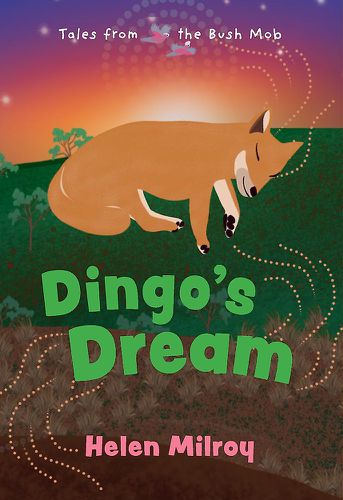
Dingo’s Dream is the sixth book but the first book in the second series of Tales from the Bush Mob. These striking and engaging stories, beautifully written and illustrated by Helen Milroy, all reinforce the concept of working collaboratively to solve a problem.
In this latest book, Dingo keeps having a recurring dream which leaves him deeply disturbed and worried that he is needed. Unable to settle he begins a search, firstly checking in with the local bush mob and then venturing further afield. He ends up on Country from his past where his memories grow:
He remembered how, at sunset, all the dingoes gathered and howled together. They sang goodnight to the sun and welcomed the moon. He remembered how he loved hearing the dingo songs. But some bad things happened and now dingoes were scattered all over. P15
Dingo eventually finds the place of his dream and field mice are there to meet him and tell him of a stranger being trapped in the ravine. Dingo calls the Bush Mob together to help him in rescuing the stranger. Each of the Bush Mob will play an important part to free Tassa, a Tasmanian Devil. Tassa is weak from his ordeal and is cared for by the Bush Mob. He tells them how he was attacked by a big black cat and fell down the ravine. After Tassa safely returns to his own home, Dingo realises he wants to return to his Country and maybe find his dingo mob. Will this dream come true?
The stunning illustrations on glossy pages are a visual delight with the white text being a standout feature. This skilfully written narrative is highly accessible and would be a perfect read for those Early Years children seeking an early chapter book or would be an entertaining short novel to be read aloud in class.
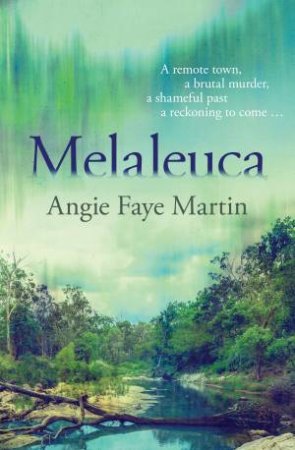
When Renee Taylor comes home to the small outback town where she grew up to look after her sick mother, she is determined to return to Brisbane as quickly as possible. She has moved to the police station in her town acting as a constable but longs to return to her real work as a detective in the city. When the body of a young woman is found by the creek, she is put in charge of the murder investigation and gradually uncovers links to the disappearance of two young Aboriginal women thirty years earlier. She is faced with the dark secrets and prejudices of the small country town. Will she be able to find the truth about the murder and disappearances or will the town’s inhabitants keep silent?
Melaleuca is an important novel that succeeds on many levels. For readers who enjoy a well written rural noir, the country setting, the intelligent detective and small-town mentality will attract and keep their interest with its many clues and red herrings. For readers who want more than a mystery they will find themselves deeply immersed in Renee’s struggle to find justice, to come to terms with her white and Indigenous heritage as well as the racism that is deeply embedded in society. Martin succeeds in vividly describing the dignity and family support of the indigenous community of the small town, while clearly showing the poverty and hardship that it faces. The indifference of the police investigation of the two Indigenous young women who disappeared is also highlighted and the class and power structure of the prosperous landowners is explored.
This is an unforgettable novel that I believe should be promoted in every library. Readers need to read the Author’s Note at the end and may be interested in the Good Reading magazine interview with author. Highly recommended.
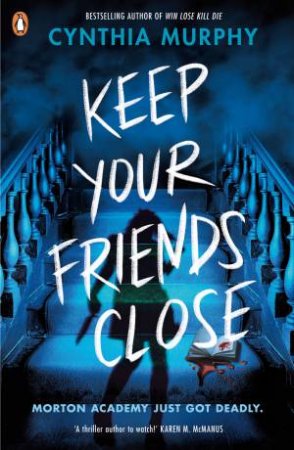
Things haven’t started out well this year for Chloe Roberts, even though she has won a place at exclusive Morton Academy and is a member of the secret Jewel and Bone society which ensures special sponsorship to go to university. The thing is, she’s been beaten to Head Girl honours by her former best friend Nikhita Patel, and on top of that her boyfriend Theo has deserted her . . . for the same Nikhita. Cool girl Nikhita seems determined to sabotage Chloe’s standing in the school. And then, strange things start to happen, first a disappearance, and then bodies start piling up. Is Nikhita the murderer, or is it the work of a mysterious cult, or perhaps a ruthless drug manufacturer?
It sounds like the makings of a riveting school murder mystery, and that’s how it starts out. But the plot really challenges believability with the school principal as leader of the student secret society in a dark underground crypt, and the police easily bought off investigating the murders. And, unfortunately it’s hard to empathise with Chloe, or even like her: she does a lot of crying, feeling sorry for herself, and regretting not taking better care of her friends. She realises she’s been just as much a mean girl as Nikhita, in the way she’s treated others. There is an interesting moment, in a discussion with the school librarian when Chloe complains about Bronte’s Jane Eyre being so irritating, ‘simpering around after a man who didn’t deserve her’, and needing to ‘stop worrying about what other people think and look after herself’. In a moment of insight Chloe realises that is exactly how she herself has behaved, but she never acts on these apparent insights.
Keep your friends close has the same Morton Academy setting as Murphy’s earlier bestseller Win, lose, kill, die (2023) so maybe there are readers who will also enjoy this very twisty murder mystery. Teenage readers who would like to move onto other school mysteries could try The other girl (2025) by Emily Barr and, for slightly older readers, Not like other girls (2024) by Meredith Adamo and Where sleeping girls lie (2024) by Faridah Abike-Iyimide.
Themes Murder, Mystery, Secret society, School stories, Mean girls.
Helen Eddy
Pocket Potters: Ron Weasley by J.K. Rowling
Bloomsbury, 2025. ISBN: 9781526674012.
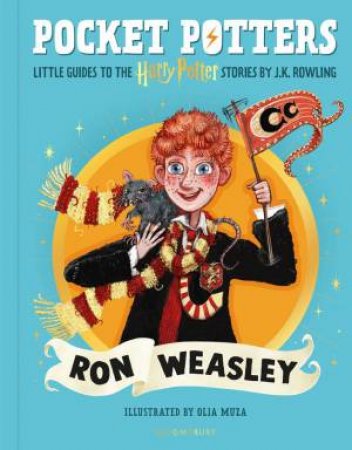
Perfect for those just embarking on their Harry Potter journey or for those who simply can't get enough, comes this new series of informative picture books all about the main Hogwarts crew. The first three (Harry, Ron, and Hermione) have already been released, with a further two,Luna Lovegood and Dumbledore, available on 24 February 2026 with more on their way later in 2026. Each book is beautifully illustrated by a different illustrator and includes labelled pictures, quotes and character, setting and storyline information. Each double-page spread has a different focus and guides us through the character's background, notable events, skills and personality traits. The pages are informative and cover the span of the Harry Potter series, without ever spoiling the plotlines for those who haven't made it through all the books yet. Each page is heavily illustrated and heaving with details, however the text is large and approachable and there is still enough white space on the page to make it easy to weave your way through. There are often young Harry Potter fans whose only real experience is with the first movies or through secondhand retellings. These are great for those who want an introduction to the world but aren't quite ready to listen to or read the whole story. They are also great for collectors who want to relive the stories or best bits without rereading.
Ron's book guides the reader through his family and home life and along his Hogwart's journey including his pesky pets, his magical mishaps and quotes from the books about his knowledge of wizarding life.