Laws of love and logic by Debra Curtis
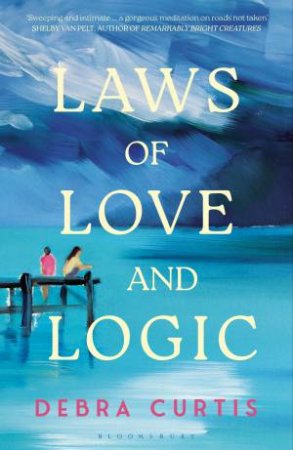
Set in the 1970s, Lilly and Jane are two curious, smart young girls, who are devastated by the early death of their inspiring feminist mother. Lily’s grief turns inward, she is thoughtful and quiet, whilst her brilliant mathematically gifted sister Jane seizes every experience, determined to live however she wants. The two sisters are very close, sharing everything, but their lives take very different paths. Lily seeks love and stability while Jane defies all conventions and takes to casual relationships, alcohol and drugs.
For Lily the boy she falls in love with as a teenager seems to be the perfect partner, the person she would marry and spend her life with. They understand the burden of grief each carries: Lily mourns the death of a mother who meant everything to her; the boy feels the loss of a mother who tearfully hugged him as a child then walked away forever. Loss and love unites the two teenagers. He reassuringly tells her ‘We’ll be okay’.
That is the plan, until one terrible night, a horrible event changes everything. The boy’s future, his career aspirations, all his dreams are destroyed, and Lily carries the guilt for what happened.
Curtis’ novel explores various dichotomies: the contention of science and faith, the two sisters’ contrasting reactions to grief, the hopefulness of first love and comfort of later love. She explores the question: can the human heart hold both things at the same time? The two girls have grown up immersed in both scientific thought and Catholicism; Lily and Jane love each other and completely understand each other’s separate choices; Lily yearns for the boy she loves but also loves Marshall, the man she later comes to marry. And then there is also the question of grief and responsibility. How much can one carry responsibility for other people’s actions? Can guilt find a way to forgiveness and redemption?
Despite the fateful events that impact Lily’s life, Curtis’s novel is a romance replete with compassion and kindness. There is sympathy even for the supposed ‘villain’ of the story, and enduring sorrow for the people who die. There is no real cruelty, just the mistakes that people make, and the best thing people can do is forgive and care for one another.
Themes: Love, Grief, Loss, Guilt, Redemption.
Helen Eddy